
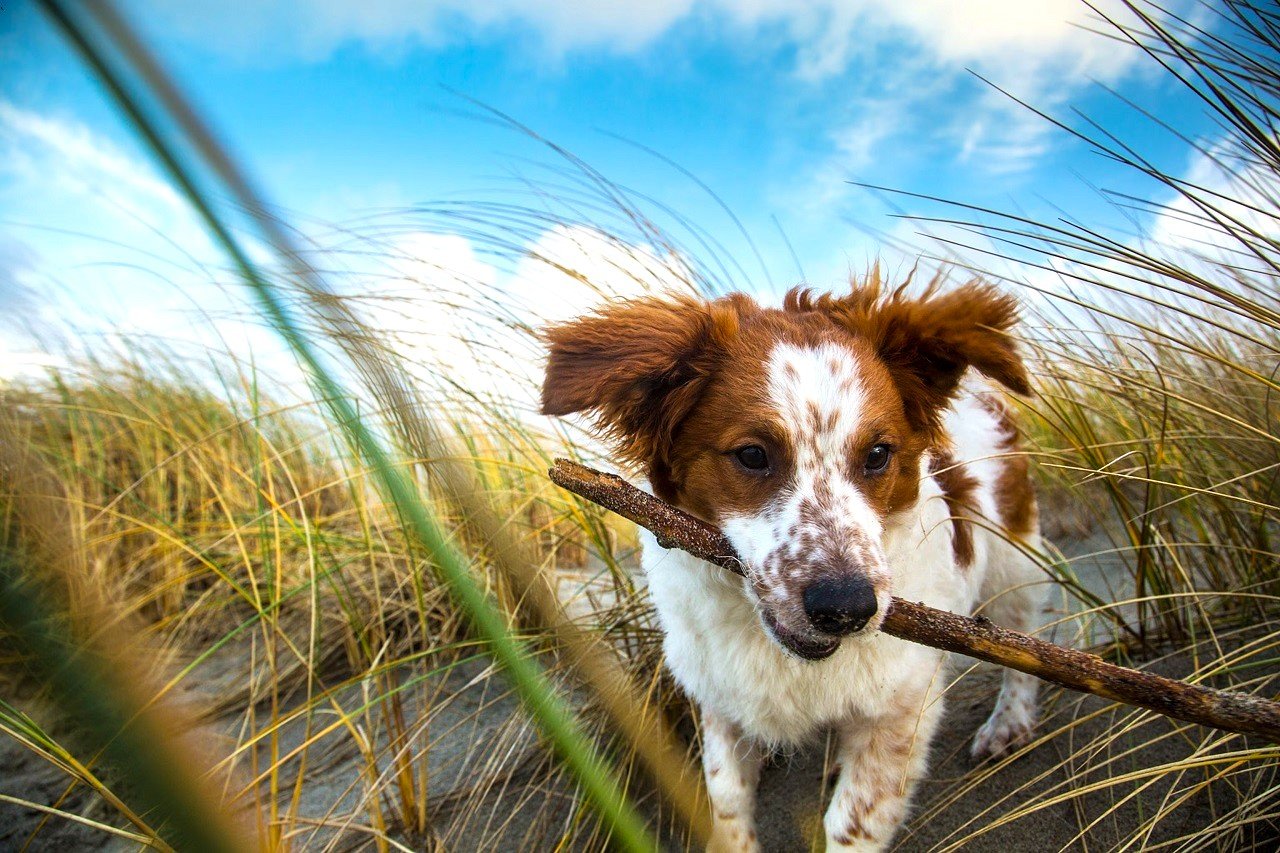
Your pet pug is clearly a domestic dog. A farm cow seems domestic, too. But what about a cat that roams outside and occasionally brings back unwanted “gifts”? Or animals like rats and bedbugs that live in our homes—without our consent?
Even scientists can’t agree on what truly defines a “domestic” species. This lack of consensus became especially clear to Elinor Karlsson and Kathryn Lord as they studied the genetics of farmed foxes—animals selectively bred for tameness in a famous Russian experiment. Were these tame foxes truly domestic? According to which definition?
“We don’t have one that is universally accepted,” says Lord, an evolutionary biologist at the University of Massachusetts Chan Medical School. “So even when we say we’re studying domestication, we’re often not even speaking the same language.”
Now, Lord, Karlsson, and their team are proposing a new definition they hope will bring clarity. According to them, a population should be considered domestic if it has evolved specifically to fit a human-related niche—and cannot thrive without it.
By this logic, populations of dogs, corn, bedbugs, and even sewer rats make the cut. Horses and honeybees, however, do not.
Their goal is to give scientists a consistent framework to study domestication. But while some researchers see the potential, others are skeptical—and question whether a new definition is needed at all.
A Debate With No Easy Answers
The word “domestic” comes from the Latin for “of the home,” but the interpretation varies widely. Does it depend on where an organism lives? How much control humans exert over it? Can it survive without human help?
Some experts liken the idea of domesticity to art or obscenity: “You know it when you see it.”
Chris Schell, an urban ecologist at UC Berkeley, defines domestication as human-directed—where people breed organisms for specific traits. Others, like biologist Carlos Driscoll of Hood College, insist that genetic changes are essential: the organism must be measurably different at the DNA level.
Still others focus on the relationship itself. “Domestication is about interaction,” says Amy Bogaard, an archaeobotanist at the University of Oxford. She sees it as a mutual adaptation, where both humans and animals alter their behavior to live alongside one another.
Redefining the Relationship
Lord and Karlsson’s approach pushes back against the idea that humans must actively direct the domestication process. After all, many so-called “domestic” populations—like feral dogs or wild blackberries—live far outside human control.
They avoid the term domesticated, which suggests deliberate human action, and instead use domestic to describe populations that have become reliant on human-created environments. A domestic population, they argue, is one that cannot survive without its human-associated niche.
That niche could be anything from a house to a trash heap. For example, the lactic acid bacterium Lactococcus lactis is key to cheese production—an entirely human-created role. Norway rats (Rattus norvegicus) are so adapted to life with humans that they have no known populations living independently in nature.
In contrast, species like horses, cows, blackberries, and yeast can all do fine in the wild. Lord and Karlsson label these organisms as “human exploiters”—they benefit from human environments, but they don’t depend on them.
Their new definition was published May 12 in Proceedings of the National Academy of Sciences.
A Useful Framework—or Just More Confusion?
Carlos Driscoll appreciates that the definition focuses on populations rather than entire species. “It’s like cancer,” he says. “There’s not just one pathway, but the outcomes can look very similar.”
Eben Gering, an evolutionary biologist at Nova Southeastern University, agrees that looking at populations makes sense. “Trying to classify a whole species one way or another is limiting,” he says.
But not everyone is convinced. Gering points out that what Lord and Karlsson describe as “domestic” is nearly identical to an existing concept: the obligate synanthrope, a species fully dependent on human environments. “It’s a definition we already have,” he says. “So what’s new?”
To Lord, that’s the point. “We argue that domestication is simply the evolution of a nonhuman population to the point where it requires an anthropogenic niche,” she explains. This removes the human-as-designer angle and focuses instead on evolution in human-shaped ecosystems.
Driscoll supports the idea of a shared definition for scientific clarity—but doesn’t see this one as an improvement. Gering adds that redefining “domestic” could create confusion across existing literature. If bedbugs are suddenly reclassified as domestic, what happens to everything that came before?
Living in a Domestic World
In the end, no single definition may satisfy everyone. “Nature is messy,” says Driscoll. “It doesn’t fit neatly into boxes.”
Still, the debate underscores the immense influence humans have on the lives—and evolution—of other species. “As a simple definition, it’s fine,” says Bogaard. But she wonders: What exactly counts as a human-associated niche? Trash piles? Fields? Climate-altered ecosystems?
If animals that rely on human trash are considered domestic, she asks, what happens in a future where all surviving species live in human-impacted environments?
Schell raises a similar point. In Chernobyl, an area abandoned by humans but forever marked by them, wildlife is thriving. “Would we call those wolves domesticated?” he asks.
It’s a dilemma Lord recognizes. As humans continue to alter and consume natural spaces, species that once thrived on their own may be forced to adapt—or disappear.
“We don’t think domestication is some special process,” she says. “It’s just evolution—evolution shaped by us.” And while the definition may remain up for debate, one thing is clear: species everywhere are changing in response to humanity. Whether we call them domestic, wild, or something in between, the world around us is evolving—and we are the catalyst.


