
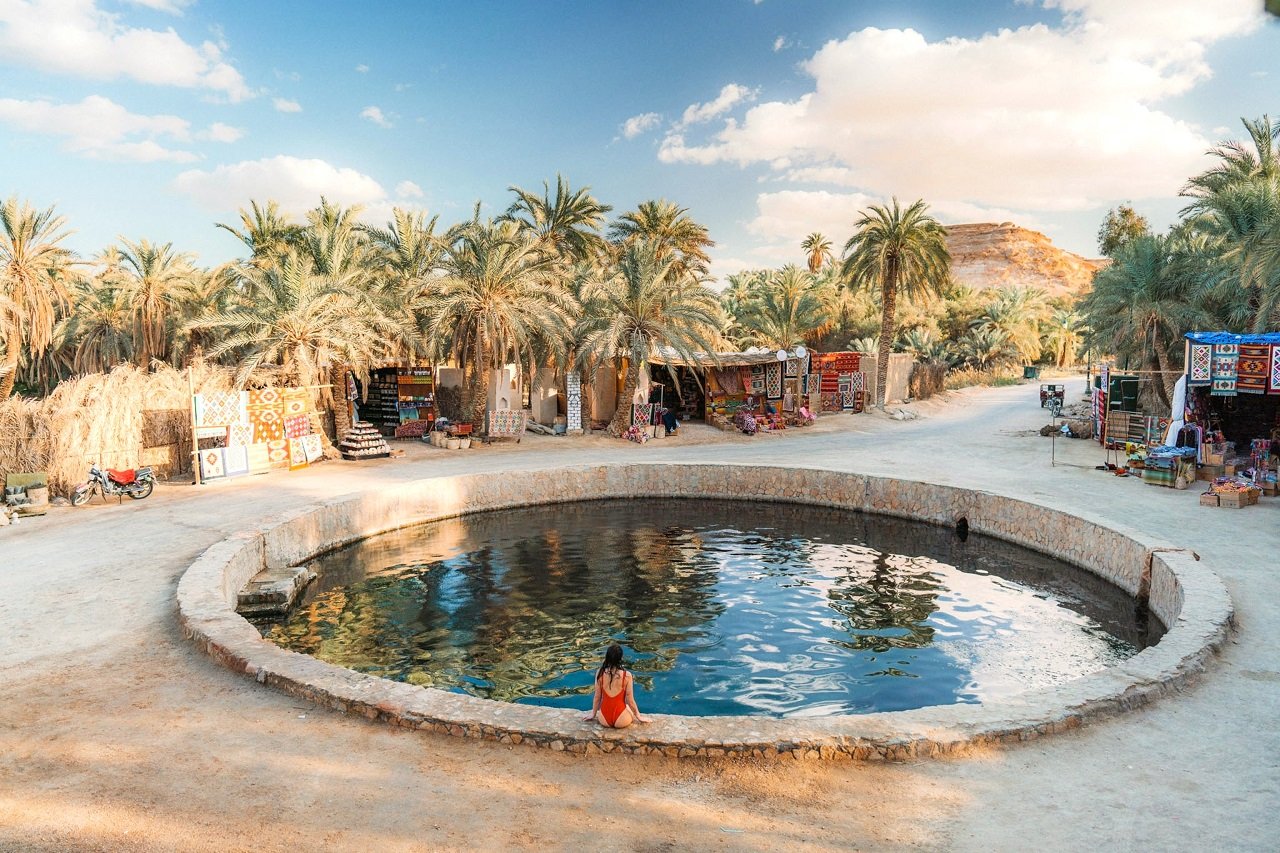
While Egypt is globally recognized for the towering Pyramids of Giza, the bustling capital of Cairo, and the majestic temples of Luxor, these popular sites represent only a fraction of the country’s vast landscape. In fact, about 90 percent of Egypt is desert—an immense, largely untapped region filled with natural beauty and ancient heritage.
Few travelers journey beyond the Nile Valley and coastal areas to explore Egypt’s expansive Western Desert, which stretches toward the Libyan border. But for those who do, the reward is an encounter with tranquil oases that have preserved unique ecosystems, archaeological treasures, and rich cultural traditions for thousands of years.
Fayoum: Close to Cairo, Rich in Nature and History
Just an hour southwest of Cairo, Fayoum remains surprisingly quiet despite its proximity to the capital. The area is best known for the Fayum Portraits—funerary paintings from Roman Egypt—though only two are still housed locally at the Kom Aushim Museum.
Fayoum’s true allure lies in its natural beauty. The ancient Lake Qarun draws migratory birds like flamingos during winter, while the elusive “Magic Lake,” often left off maps, reflects the stars and sky in spectacular fashion. Fayoum is also home to Wadi Al-Hitan (Valley of the Whales), a UNESCO World Heritage Site where fossils from 40 million years ago reveal the evolution of whales from land mammals to sea creatures.
Siwa Oasis: Where Time Stands Still
Once accessible only by camel, Siwa remains one of Egypt’s most isolated oases, located near the Libyan border. It was historically a destination for pilgrims seeking counsel from the Oracle of Amun, whose ruins still stand atop a hill.
The mud-brick Shali Fortress and the Mountain of the Dead, filled with ancient tombs, offer insight into Siwa’s past. But perhaps its most breathtaking attraction is its saltwater lakes. These gem-colored pools, ringed with crystallized salt, are ideal for floating and photography.
Bahariya Oasis: Volcanoes, Mummies, and Springs
Located a few hours from Cairo, Bahariya is the most accessible of Egypt’s desert oases. It’s believed that Alexander the Great once passed through here and may have left behind a temple in his name.
The area is also home to the Valley of the Golden Mummies, where hundreds of gilded mummies have been discovered. Visitors can also explore the surreal Black Desert—dunes and mountains covered with volcanic stones. With over 400 hot and cold springs, Bahariya offers plenty of opportunities to relax after a desert trek.
Kharga Oasis: A Roman Legacy in the Sands
Known as a major Roman trade route hub, Kharga Oasis showcases remnants of the empire’s presence in Egypt. The El-Deir Fortress still rises from the sands, remarkably preserved after centuries. Travelers through time have etched their names into its walls—from ancient traders to modern soldiers.
Kharga also boasts the El Bagawat necropolis, one of the oldest Christian cemeteries in the world. Its mud-brick tombs, decorated with early Christian art and Greek inscriptions, offer a rare glimpse into Egypt’s Coptic heritage.
Dakhla Oasis: Subterranean Ruins and Soothing Springs
Dakhla, whose name means “the inner oasis,” is tucked deep within the Western Desert. Like Kharga, its golden era was during Roman times. The well-preserved Deir el-Hagar temple, built for pagan rituals, still stands. Nearby lies the ancient village of Al Qasr, where mud-brick alleyways hint at its layered past.
What makes Dakhla especially appealing are its more than 600 hot springs—natural pools filled with mineral-rich water, set against a backdrop of pink limestone cliffs.
Farafra Oasis: Gateway to the White Desert
Often considered Egypt’s most secluded oasis, Farafra is the entrance to the otherworldly White Desert. Here, stark white rock formations resemble surreal sculptures—mushrooms, meringue-like swirls, and what looks like snow-covered hills.
A short journey from the oasis reveals Neolithic archaeological sites, including traces of ancient dwellings and rock art that predate the pyramids. These discoveries continue to attract researchers and intrepid travelers alike.


