
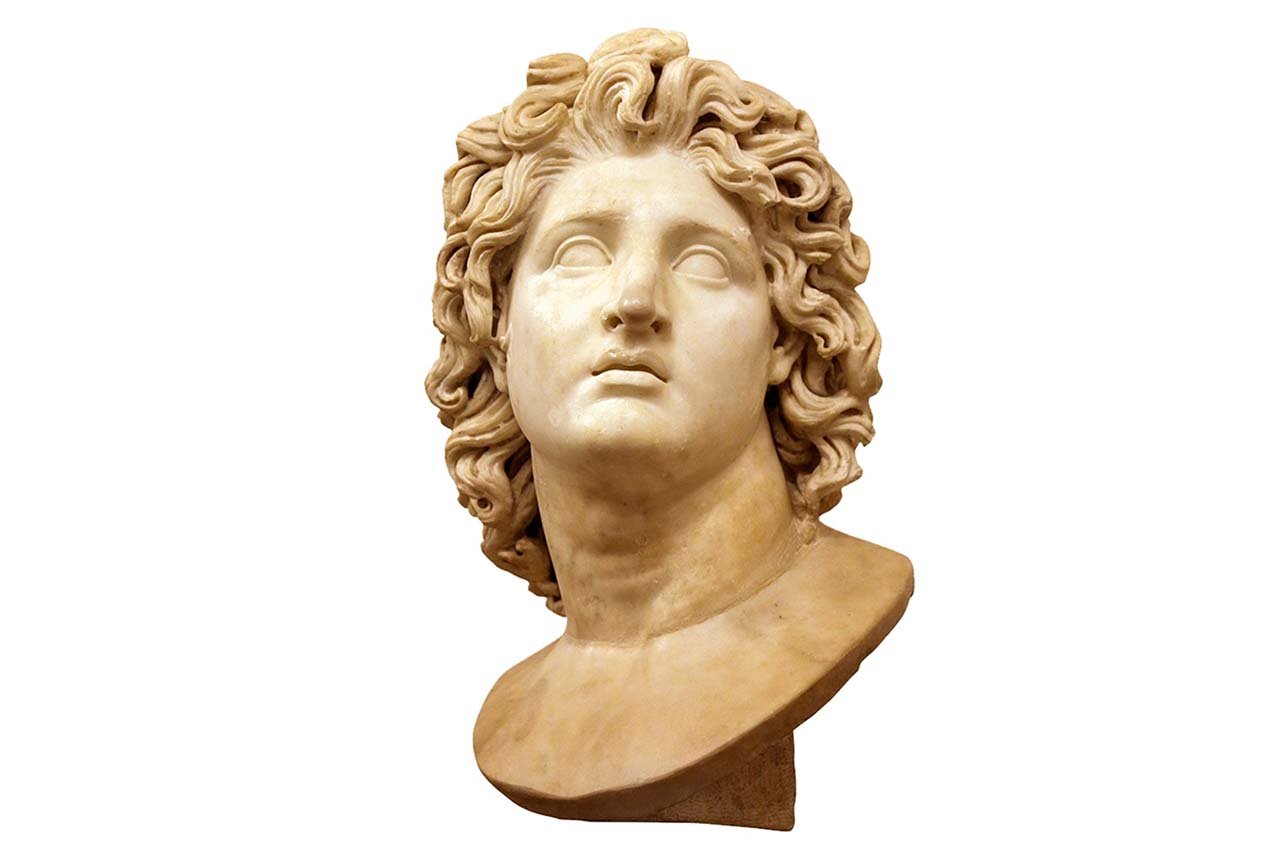
Alexander the Great’s rise to power was as much a product of his ambition and education as it was of his complicated relationship with his father, Philip II of Macedon. Although popular culture often dramatizes Alexander’s childhood as dominated by fierce parental strife, the surviving historical record—largely written by Philip’s Athenian enemies—makes it difficult to separate fact from fiction.
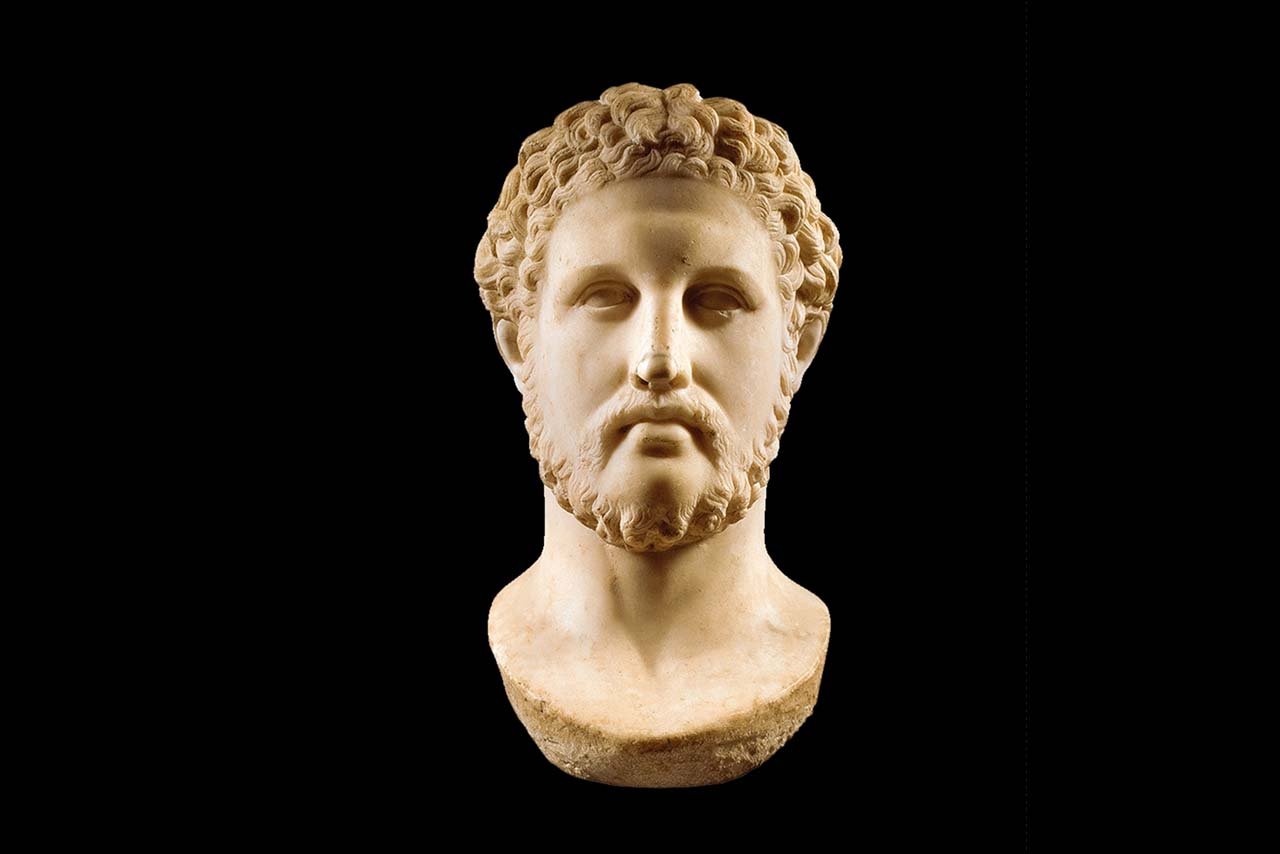
Nonetheless, political instability and family rivalries were real and ever-present at the Macedonian court. One key source of this tension was Philip’s practice of polygamy, used as a tool of diplomacy and dynastic consolidation. He had seven wives, but only two sons: Philip III Arrhidaeus and Alexander. A possible third, Caranus, is mentioned in some texts, but his existence remains uncertain.
Without a formal succession system or a hierarchy among wives, court intrigue thrived. To be a viable heir, a prince needed to belong to the ancient Argead dynasty, descended from Macedonia’s founder Perdiccas I. Even more crucial was the social and political clout of one’s mother. While Macedonian noblewomen bolstered their children’s legitimacy, Olympias—Alexander’s mother—was Epirote, placing her son at a perceived disadvantage. Yet Alexander also benefited from an advantage: his half-brother Arrhidaeus suffered from a mental disability, allegedly caused by poisoning—a crime attributed by some sources to Olympias.
Raised in the tradition of Macedonian royalty, Alexander received a well-rounded education in both intellectual and military disciplines. His most famous tutor was Aristotle, who shaped the young prince’s worldview during three formative years. By age 16, Alexander was entrusted to act as regent while Philip campaigned elsewhere. He led a victorious campaign against the Thracian Maedi tribe and founded a city, Alexandroupolis Maedica, foreshadowing his later empire-building.
Family Fractures Behind the Throne
Despite Olympias’ portrayal in ancient texts as manipulative and ruthless, especially by Plutarch, such accounts often reflect misogynistic biases. More likely, she was a shrewd political strategist navigating a dangerous royal court.
Relations among Philip, Olympias, and Alexander began to fracture during a critical moment: Philip’s marriage to Cleopatra, a young noblewoman of Macedonian origin. Until then, none of his wives had come from Macedonia’s elite. Cleopatra’s powerful uncle, the general Attalus, would help lead Philip’s coming invasion of Persia. This marriage carried political significance—but also personal consequences.
At a wedding banquet, Attalus called for a “legitimate heir” from Philip and Cleopatra. Alexander, enraged, interpreted the toast as a direct insult. He hurled a cup at Attalus and clashed with Philip, who drunkenly tried—and failed—to strike his son. Alexander mocked his father’s fall and left the court, taking refuge with his mother and her family in Epirus.
The rift deepened with the Pixodarus affair. When Philip arranged a marriage between his disabled son Arrhidaeus and the daughter of a Persian satrap, Alexander intervened, offering himself as groom instead. Philip was furious. Not only had Alexander jeopardized a diplomatic alliance, but he had also violated the king’s sole authority to arrange royal marriages. The move hinted at growing distrust—and competing visions for the future of Macedon.
Murder in Aigai
Philip’s ambitions were cut short in 336 B.C., when he was assassinated during the wedding of his daughter Cleopatra (not to be confused with his new wife) to Olympias’s brother. The killer, Pausanias, was a member of the king’s bodyguard, reportedly motivated by personal revenge after being humiliated and ignored by Philip.
Yet conspiracy theories flourished. Some pointed fingers at Olympias, who may have feared losing influence should Cleopatra bear Philip a new heir. Others blamed Alexander, seeking to secure his succession. Still others accused Persian agents or rival Macedonian nobles. The truth remains one of ancient history’s great unsolved mysteries.
With Philip gone, Alexander swiftly consolidated power, eliminating rivals and securing loyalty from key military and political factions.
Legacy and Tension Beyond Death
Though Alexander would eclipse Philip in fame, their relationship remained central to his identity. At the Battle of Chaeronea, Alexander—just 18—commanded the left wing of Philip’s army and crushed the elite Sacred Band of Thebes, a feat that secured his reputation as a military prodigy. Afterward, he led peace negotiations in Athens, displaying both martial and diplomatic skill.
Philip himself celebrated the victory by constructing the Philippeion in Olympia, with statues of himself, his parents, Olympias—and Alexander. Including his son in this monument was a powerful endorsement of Alexander’s future kingship.
Yet years later, Alexander’s feelings about his father remained complicated. In a drunken rage during a banquet, he killed Cleitus the Black, a trusted general who had defended Philip’s legacy against Alexander’s self-aggrandizing claims. The emotional volatility revealed the unresolved tension between honoring his father and stepping out of his shadow.
Alexander also acknowledged his father’s influence in a speech to mutinous troops at the Opis River in 324 B.C., crediting Philip with civilizing Macedonia and preparing it for greatness. Despite their conflicts, Alexander recognized that his own legend was built on the foundation his father laid.
Conclusion
The father-son dynamic between Philip II and Alexander the Great was one of ambition, rivalry, and profound political consequence. While Philip forged the military and political infrastructure of Macedon, it was Alexander who expanded its reach across three continents. Their complex relationship shaped not only each other’s legacies—but the course of world history.


